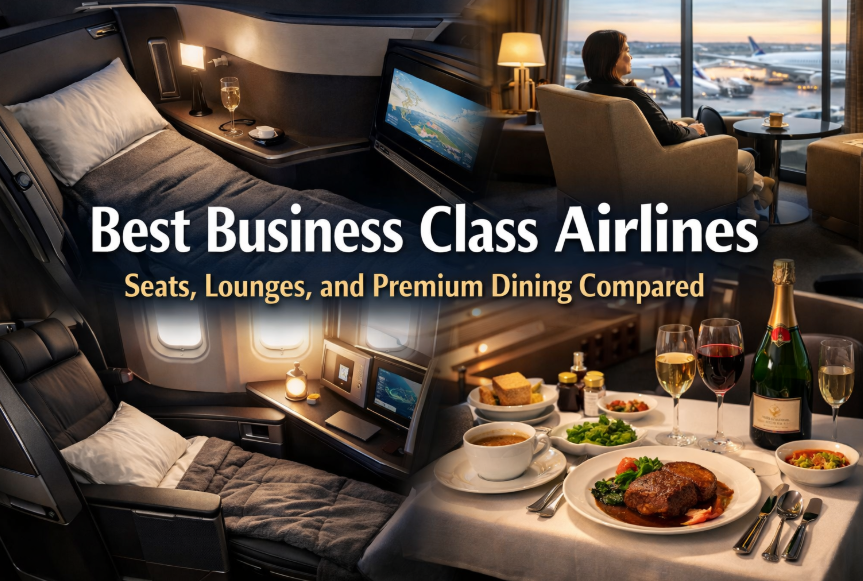
Business class airlines compete in a premium travel market where a lie-flat seat, a quiet lounge, and a restaurant-level meal can turn a long-haul flight into a genuinely enjoyable luxury experience. This business class comparison guide breaks down the best business class airlines by the three things premium travelers care about most: seat comfort, lounge quality, and premium dining standards. If you’re paying premium airfare or redeeming valuable miles, you want business class value that feels like a smart investment, not a pricey gamble. This airline business class review is built to help you spot real premium cabin quality quickly, so you can book with confidence and avoid routes that look fancy online but feel average in the air.
Because business class travel varies by aircraft, route, and even catering station, the smartest way to choose a top business class airline is to compare the full premium journey, not just the seat photos. A true best business class airline offers direct aisle access seating, reliable lie-flat sleep, polished in-flight service, strong lounge access, and premium dining that tastes good at altitude. The goal of luxury air travel is simple: arrive rested, fed well, and ready to perform, whether you’re flying for business meetings, high-value leisure travel, or long-haul relocation trips.
What Makes a Business Class Airline “Best” in 2026
The best business class airlines in 2026 win by delivering consistent premium cabin performance across comfort, privacy, service, and ground experience. A modern premium business class seat needs direct aisle access, ergonomic support, and a bed mode that feels stable and flat, because sleep quality is the biggest driver of business traveler satisfaction. A high-quality business class product also includes smart storage, strong Wi-Fi, reliable power outlets, and intuitive seat controls, because premium productivity matters when your flight is part office and part recovery zone. When an airline combines quiet cabin design with attentive service, you get luxury travel that feels calm instead of chaotic, even on full flights.
A top business class airline also wins on premium lounge access and premium dining consistency, because the journey starts before boarding and continues after landing. Airport lounges reduce travel friction with fast Wi-Fi, quiet seating, shower suites, and quality food, which is a serious value upgrade for frequent flyers and executive travelers. In-flight premium dining becomes the final differentiator, because great business class catering includes well-timed service, balanced menus, and drink programs that match the cabin’s luxury branding. When you stack all three—best business class seat, best business class lounge, and best premium dining—you get a premium airline experience worth the price.
Business Class Seats Compared: Lie-Flat, Suites, and Smart Layouts
Business class seats compared properly means focusing on layout, privacy, and real sleep performance, not marketing labels. The current benchmark for top business class airlines is a 1-2-1 seating layout with direct aisle access, because stepping over a neighbor feels outdated in a premium cabin. Lie-flat business class seats need enough bed length for tall travelers, enough shoulder space for side sleepers, and enough footwell room so your ankles don’t feel trapped at 35,000 feet. When a business class airline nails bed engineering, the cabin becomes a long-haul sleep tool that can replace a hotel night and protect your next-day performance.
Business class suites with doors can add a real privacy upgrade, but a “door” only matters if the seat still feels spacious and comfortable. Some premium cabin designs use privacy wings, staggered layouts, or throne seats to deliver quiet separation without a full door, and these designs can feel more open while still private. The best business class seats also include practical premium features like wireless charging, multiple USB ports, strong reading lights, deep side compartments, and a stable table for laptops. A premium airline seat should support both sleep and productivity, because business class travelers often need to work, rest, and eat well on the same flight.
Cabin Design and Privacy: Why Some Flights Feel Like a Hotel Room
Cabin design turns a business class seat into a luxury flight experience, because materials, lighting, and sound control shape how your body feels during a long-haul journey. Airlines that use warm lighting zones, soft-touch surfaces, and modern cabin acoustics create a premium travel environment that reduces stress and travel fatigue. A strong business class cabin design also supports privacy by spacing seats intelligently, controlling sightlines, and minimizing aisle noise around your head area. When cabin design works, you feel like you’re in a private travel pod instead of a crowded airplane cabin.
Privacy also depends on seat type, because couples want paired center seats while solo travelers want maximum separation. Some premium business class cabins feature “honeymoon” pairs for companions, while others prioritize solo throne seats for executive travelers who want quiet focus. On red-eye flights, the best cabin designs keep the aisle darker, reduce overhead glare, and limit service disruption, because sleep is the luxury goal. On daytime flights, the best cabin designs support premium productivity with strong task lighting, stable tables, and easy-access storage, because business class passengers often treat the seat like a moving office.
Business Class Lounges Compared: Showers, Quiet Zones, and Dining
Business class lounges compared fairly means looking at three lounge essentials: space, food quality, and recovery features. The best business class lounges feel like premium hotels inside an airport, because they provide quiet zones, comfortable seating, strong Wi-Fi, and real privacy for calls or work. A premium airport lounge becomes a travel advantage when it includes showers, nap rooms, wellness areas, and well-managed crowd flow, because those details protect your energy on long travel days. The lounge experience is a core part of premium airline value, especially on connections where delays, gate changes, and long walks are common.
Lounge value also depends on access rules, because some airlines restrict premium lounge entry by route, tier, or partner status. Signature flagship lounges usually outperform contract lounges by a wide margin, especially in premium dining, beverage selection, and staff responsiveness. Peak-hour lounge crowding can ruin the luxury vibe, so the best strategy is to arrive early enough to secure quiet seating, shower slots, and dining access. When a business class airline pairs a top-tier lounge network with consistent premium cabin service, you get a seamless end-to-end luxury travel experience.
Premium Dining in the Air: Menus, Chefs, and Service Timing
Premium dining in business class is more than a menu photo, because food at altitude needs smart seasoning, balanced texture, and timing that respects sleep and comfort. The best business class airlines offer dine-on-demand flexibility, so you can eat when you want rather than when the cabin schedule demands it. Luxury airline catering also improves when airlines focus on regional authenticity, because travelers notice when dishes reflect real culinary standards instead of generic “international” plates. A premium dining experience should include quality bread, fresh sides, strong sauces, and desserts that taste clean, because business class customers expect restaurant-level detail.
Beverage programs also separate top business class airlines from average premium cabins, because a good wine list, solid champagne, and real espresso add noticeable luxury value. A strong premium airline will offer thoughtful pairings, craft cocktails, and non-alcoholic options that feel upscale, because premium travelers often want health-forward choices. Service timing is also crucial, because aggressive tray clearing and bright lights can disrupt rest on long-haul flights. The best business class dining feels smooth and personalized, because a premium journey should follow your rhythm, not force you into a rigid routine.
The Top Business Class Airlines to Book for Seats, Lounges, and Dining
The top business class airlines usually come from regions that invest heavily in premium aviation, because premium travel is a brand strategy and a profit engine. Middle East premium carriers often dominate business class rankings due to luxurious cabin design, strong lounge infrastructure, and premium dining investment that feels almost first-class. Asian premium airlines frequently lead in service consistency, cabin cleanliness, and refined food execution, because hospitality standards are deeply embedded in the travel culture. European premium airlines can excel in lounge networks and wine programs, especially on major hub routes where flagship lounges set a high benchmark.
In the Americas, business class quality varies widely by aircraft and route, so smart travelers check the specific plane type and seat map before booking premium airfare. The best approach is to compare business class products by route reliability, lounge access at your departure hub, and catering reputation on your flight’s origin station. If you want the most consistent premium travel experience, prioritize airlines known for 1-2-1 seating, modern cabin designs, strong premium lounges, and premium dining partnerships. A premium flight should feel premium from check-in to arrival, because business class pricing demands full-value delivery.
Best Business Class Seats by Traveler Type
Best business class seats depend on your body type, sleep style, and travel goals, because comfort is personal even in luxury travel. Tall travelers should prioritize business class seats with longer bed length and bigger footwells, because cramped foot space can ruin sleep quality on long-haul routes. Side sleepers should look for seats with wider shoulder space and softer bedding support, because narrow seats create pressure points during long rest periods. If your goal is maximum privacy, solo travelers often love throne-style seats or suites with strong dividers, because separation reduces noise and visual distraction.
Couples often prefer center seats with adjustable privacy dividers, because you can choose “together mode” or “private mode” depending on the flight mood. Travelers who work in-flight should prioritize stable tables, easy charging access, strong Wi-Fi, and task lighting, because productivity is a premium benefit of business class cabins. If you’re choosing between similar airlines, pick the seat that matches your travel style, because the best business class airline for you is the one that supports your sleep and focus. Luxury travel is personal, so the best seat is the one that makes you arrive feeling like yourself again.
Best Business Class Lounges by Airport Experience
The best business class lounges can feel like private clubs, because premium lounge design focuses on comfort, quiet, and service flow. Food-first travelers should choose airlines with flagship lounges that offer à la carte dining or high-quality buffet stations, because premium lounge dining can replace expensive airport restaurants. Recovery-first travelers should prioritize lounges with shower suites, wellness rooms, and nap spaces, because long-haul travel demands physical reset. A shower before a red-eye or after a long connection can transform the entire premium journey.
Productivity-first travelers should look for lounges with quiet work zones, phone booths, reliable Wi-Fi, and plenty of power, because business travel requires dependable infrastructure. If you travel with companions, spacious lounges with mixed seating zones and family-friendly areas feel more comfortable, because crowding can turn a premium lounge into a noisy waiting room. Airport lounge value also depends on location within the terminal, because a great lounge loses value if it’s far from your gate or hidden behind long queues. A premium lounge should reduce friction, not add extra steps to your travel day.
Best Premium Dining by Airline: What to Expect
Best premium dining airline experiences usually combine flexible service, consistent menu execution, and strong beverage programs, because luxury is built on reliability. Dine-on-demand systems offer the most control, because you can sleep first, eat later, or snack lightly instead of committing to a full course meal. Airlines with strong wine programs tend to invest in trained cabin crew and curated lists, because premium travelers notice when the wine and pairing feel intentional. If you prefer cocktails, look for airlines that promote premium spirits and proper mixing standards, because a “premium drink” should taste premium.
Regional cuisine quality matters too, because the best airlines treat food as cultural hospitality rather than a checklist item. Travelers who care about breakfast should prioritize airlines known for good coffee, fresh fruit, and well-cooked eggs, because a strong breakfast improves arrival energy. If you have dietary needs, choose airlines with reputable special-meal systems and consistent execution, because premium dining should work for every traveler. In the end, the best premium dining is the one that tastes good, feels calm, and fits your sleep schedule, because business class dining should support comfort, not compete with it.
How to Book Business Class for Less Without Losing Quality
Booking business class for less is possible when you target value routes, smart timing, and mileage strategies, because premium airfare pricing changes constantly. Many travelers get better business class deals by watching fare sales on competitive long-haul routes, because airlines discount premium seats when they need to protect market share. Upgrades can also be a value path, but only when the underlying fare class and route offer real upgrade availability, because “upgrade eligible” is not the same as “upgrade likely.” Miles and points strategies work best when you focus on sweet spots, partner redemptions, and flexible travel dates, because premium award availability can vanish quickly.
To protect value, always verify the aircraft type and seat configuration before booking, because “business class” can mean radically different seats on different planes. Avoid paying premium pricing for older angled-flat or 2-2-2 layouts on long-haul routes, because direct aisle access is a modern business class standard. Use seat maps, route reviews, and cabin photos to confirm the product, because premium airline marketing can hide older configurations. When you book smart, you don’t just “save money,” you buy higher luxury value per dollar, because premium travel is about quality, not just labels.
Conclusion
The best business class airlines deliver a complete premium travel experience where a lie-flat seat supports real sleep, a high-quality lounge reduces airport stress, and premium dining feels enjoyable at altitude. The smartest way to compare business class is to judge the full journey, because comfort, privacy, lounge access, and food quality all shape the value of premium airfare. When you match the seat style to your sleep needs, choose lounges that fit your connection pattern, and book routes known for consistent catering, you turn business class from “expensive” into “worth it.” Business class should feel like a smooth luxury upgrade that protects your time, your energy, and your next day.
FAQs
1) What is the most important feature in a business class seat?
A fully lie-flat bed with direct aisle access is the most valuable feature because it protects sleep and comfort on long-haul flights.
2) Do all business class tickets include lounge access?
Most long-haul business class tickets include lounge access, but rules vary by airline, route, and partner lounge agreements.
3) Is dine-on-demand better than set meal service?
Dine-on-demand is usually better for sleep and flexibility because you control timing, which improves comfort and recovery.
4) How can I avoid outdated business class seats?
Check the aircraft type, seat map, and cabin photos before booking because airlines often operate mixed fleets with different seat products.
5) Are business class lounges worth arriving early for?
Arriving early can be worth it because showers, quiet work zones, and premium lounge dining can significantly improve the travel experience.
Read More