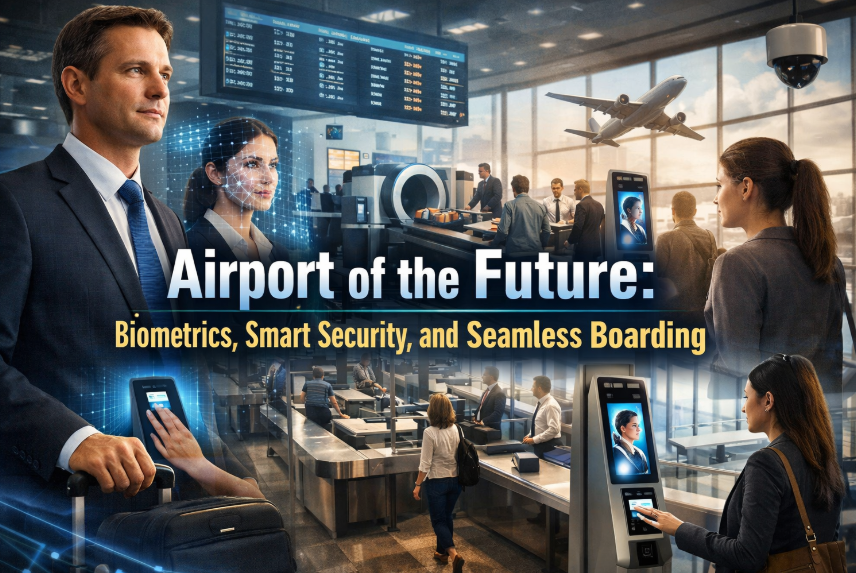
Airports are under pressure like never before, and the stakes are commercial as well as operational. Every minute a traveler spends stuck in a security queue is a minute an airport loses in customer satisfaction, premium retail opportunity, and high-value advertising performance. The “airport of the future” is becoming less of a futuristic slogan and more of a measurable business strategy built on biometric identity verification, smart security screening, and seamless boarding technology that reduces friction at every step of the passenger journey.
The shift is happening because the economics demand it. Airlines want better on-time performance, airports want higher throughput without endless construction, and passengers want a premium travel experience that feels as fast as a digital checkout. The result is a new model: identity becomes the passport-like key that unlocks check-in, bag drop, security, lounge access, and boarding—often without the traveler needing to take out a document more than once. This isn’t science fiction; it’s an airport operations upgrade designed to improve capacity, strengthen security, and create premium customer experiences that attract high-CPC advertisers in travel, fintech, cybersecurity, and luxury services.
Why Airports Must Evolve Now
Airports are facing a growth-and-congestion dilemma, and the solution can’t be “build more space” forever. Global passenger volume continues to stretch terminals that were designed for an earlier era of aviation demand, and the cost of expanding physical infrastructure is often slower and more expensive than upgrading digital airport systems. Modern airport transformation is being driven by a need for scalable passenger processing, better queue management, and improved airline punctuality, especially during peak travel seasons when boarding delays turn into cascading schedule disruptions.
At the same time, airport security expectations are rising, and they’re rising alongside customer expectations. Travelers want strong aviation security, but they also want speed, clarity, and less uncertainty. That combination pushes airports toward smart security technology and biometric travel solutions that can improve screening accuracy while reducing bottlenecks. In practical terms, the future airport is less about shiny architecture and more about operational intelligence that can predict congestion, automate identity checks, and deliver a smoother, safer airport experience.
Biometrics Explained: The Identity Layer of Modern Travel
Biometrics in aviation refers to using unique biological characteristics—most commonly facial recognition, fingerprints, or iris scans—to verify identity with high accuracy. In an airport setting, biometric identity verification aims to confirm that the traveler is the same person associated with the booking, the travel document, and the security clearance process. The promise is simple: fewer manual checks, fewer document handoffs, and fewer opportunities for human error, which matters when airports handle thousands of passengers per hour.
The most important concept behind biometric airport technology is that identity can be turned into a secure digital credential. Many modern implementations rely on tokenization, encryption, and digital identity management to reduce exposure of sensitive data while enabling fast verification. Instead of repeatedly presenting a passport and boarding pass, a traveler can be verified with a biometric match that links to the existing booking and immigration data in compliant systems. Done well, this approach supports faster passenger flow, stronger fraud prevention, and a more seamless airport journey that feels consistent from curb to gate.
Biometric Check-In and Bag Drop
Biometric check-in is one of the first visible changes in a smart airport environment because it targets a classic pain point: the check-in line. In a biometric-enabled terminal, passengers can confirm identity at a kiosk or dedicated check-in point using facial recognition paired with a secure system match. That process can reduce repetitive manual checks and speed up airline counter operations, especially for travelers who already completed digital check-in through an airline app. For airports and airlines, this is not just convenience—it’s a throughput strategy that reduces congestion and improves staffing efficiency.
The same logic extends to biometric bag drop, where automated bag drop stations verify identity before accepting luggage. By connecting identity verification to baggage handling systems, airports can reduce mis-tags, reduce service counter dependency, and improve baggage traceability. In a business sense, faster bag drop increases time spent in retail zones, lounges, and premium dining, which directly supports airport commercial revenue and high-value ad placements. When passengers move faster through early touchpoints, airports can deliver a better travel experience and a stronger revenue model in the same footprint.
Smart Security: Faster Screening Without Lowering Standards
Security is often the biggest source of passenger frustration, but it’s also the most sensitive point in the airport journey. Smart security focuses on improving screening throughput while maintaining or improving detection performance, using tools like CT scanners, automated tray return systems, and AI-assisted threat detection. CT scanners, for example, provide more detailed imaging that can speed decision-making and reduce the need for manual bag checks, which cuts delays and improves lane efficiency. AI analytics can support operator consistency by flagging anomalies and reducing routine workload in high-volume periods.
The “smart” element also includes operational intelligence: real-time queue monitoring, predictive staffing, and risk-based screening models that allocate resources where they matter most. Airports can use sensors and analytics to see congestion before it becomes a problem, reroute passengers, and adjust lane configurations dynamically. For travelers, the headline is shorter lines and fewer surprises. For airports, the headline is improved capacity without building new lanes, plus better performance metrics that airlines care about, including departure punctuality and gate readiness.
Seamless Boarding: From Gate Chaos to Flow Management
Boarding is where airport operations meet airline operations in a very public way, and it’s often where “small delays” become major ones. Seamless boarding uses biometric boarding gates and automated passenger validation to reduce time spent scanning documents, resolving mismatches, and managing line confusion. With biometric boarding, the passenger approaches the gate, the system verifies identity against the flight manifest, and boarding confirmation happens in seconds. That speed matters because it reduces boarding time, lowers stress at the gate, and supports better on-time departure performance.
But boarding isn’t only about identity checks; it’s also about crowd flow. Modern airports are using digital signage, mobile alerts, and dynamic boarding group management to reduce clustering and keep walkways clear. In a future-ready terminal, boarding becomes a controlled flow rather than a gate-side traffic jam. That improves accessibility, reduces operational friction for staff, and creates a calmer passenger experience—an important factor for premium travelers and high-spending customers who drive luxury travel revenue and premium advertising demand.
The Connected Airport: IoT, Digital Signage, and Predictive Ops
A future airport runs like a connected system, not a collection of separate checkpoints. IoT sensors can measure line length, track baggage movement, monitor gate occupancy, and report equipment status in real time. When these signals feed into an airport operations control center, leaders can manage the terminal as a live network, adjusting staffing, opening lanes, and rebalancing passenger flow before delays escalate. This type of connected airport strategy turns reactive operations into predictive operations, which is a major shift in efficiency and reliability.
Predictive maintenance is another quiet revolution in smart airport technology. Sensors on baggage belts, escalators, boarding gates, and screening machines can flag signs of wear before failures occur, reducing downtime and service disruptions. For airports, fewer breakdowns translate into smoother passenger journeys and stronger airline relationships. For advertisers and commercial partners, a stable and predictable passenger flow means better foot traffic patterns, better targeting, and more valuable ad inventory across digital signage, mobile platforms, and premium retail placements.
Personalized Passenger Experience
Personalization in airports isn’t only about luxury; it’s about clarity and control. Smart wayfinding tools can guide travelers to the fastest security lane, the correct gate, or the nearest service desk using mobile navigation and location-aware notifications. When passengers receive accurate updates—gate changes, boarding time shifts, lounge eligibility, or baggage carousel details—they waste less time and feel more confident. That confidence is a measurable outcome because it reduces missed flights, reduces staff interventions, and increases overall satisfaction scores.
Airports are also using personalization to grow premium revenue. Digital identity and app integration can streamline lounge access, priority services, and VIP meet-and-greet offerings, making it easier to sell premium packages and upgrades. Retail and dining can also become more targeted through opt-in offers and loyalty integrations, which helps airports increase per-passenger spend. From an SEO and advertising perspective, this is exactly where high-CPC themes appear: premium travel, airport lounge access, VIP airport services, cybersecurity compliance, and digital identity solutions that attract enterprise-level budgets.
Data Privacy, Cybersecurity, and Governance
Biometrics can deliver speed and security, but it also raises questions about privacy, consent, and data protection. Responsible biometric deployment requires clear governance: how data is collected, how long it is stored, who can access it, and how travelers can opt in or opt out depending on local rules. In practice, many systems aim to minimize risk by using encrypted templates rather than raw images, applying strict retention limits, and relying on token-based identity matching. For airports and airlines, the goal is to protect passengers while complying with regulations and maintaining trust.
Cybersecurity becomes non-negotiable in a connected airport ecosystem because every sensor, gate system, and identity platform becomes part of the attack surface. A modern airport security strategy often leans on zero-trust architecture, segmentation, and continuous monitoring to prevent breaches and protect operational continuity. This matters commercially as well, because a secure airport brand attracts premium airline partnerships and increases passenger confidence. In an era of frequent data breach headlines, the most advanced airports will be the ones that treat privacy protection and cybersecurity resilience as core infrastructure, not optional add-ons.
Airline–Airport Collaboration
Seamless travel requires shared systems, but collaboration is historically difficult because airports, airlines, and government agencies often use different platforms. The future airport depends on interoperability: shared standards for identity verification, baggage data, and departure control integration that work across multiple carriers and international routes. When these systems align, the passenger experiences one continuous journey instead of a series of disconnected checks. That continuity is essential for international hubs that compete for transfer traffic and premium long-haul travelers.
Collaboration also impacts cost and scalability. When airlines and airports co-invest in biometric gates, smart bag drops, and integrated passenger processing, they reduce duplicated effort and improve operational performance together. For travelers, that means less paperwork and fewer delays. For stakeholders, that means better utilization of terminal space, more predictable schedules, and stronger revenue opportunities from premium services. In short, the airport of the future is not built by airports alone—it is built through coordinated digital infrastructure across the aviation ecosystem.
What This Means for Costs, Efficiency, and Revenue
Airports aren’t adopting biometrics and smart security only because it looks modern; they’re doing it because it changes the cost equation. Automated identity checks can reduce staffing pressure at repetitive touchpoints, while real-time operations data can reduce waste and improve resource allocation. That kind of efficiency matters during peak demand, when adding staff is expensive and training takes time. Technology becomes a force multiplier, helping airports process more passengers with less friction and better consistency.
On the revenue side, future-ready airports create premium monetization opportunities. Faster throughput increases dwell time in commercial areas, which supports luxury retail, premium dining, and VIP services. Digital infrastructure also supports better advertising performance through smarter audience insights, more reliable footfall patterns, and high-impact digital signage. This is where high-value advertisers lean in: luxury travel brands, fintech payment platforms, cybersecurity providers, travel insurance, premium credit cards, and business-class travel services that target affluent travelers in high-intent moments.
What Travelers Should Expect Next
For passengers, the next phase of airport modernization will feel like a shift from “show documents repeatedly” to “verify once and move smoothly.” Expect more airports to offer biometric options for check-in, bag drop, and boarding, especially on routes where airlines and border authorities support digital identity programs. Expect more mobile-first experiences where notifications, digital boarding passes, and smart wayfinding reduce uncertainty. And expect security upgrades that rely on better scanning and smarter lane management to reduce the time cost of screening.
Travelers can prepare by keeping travel documents current, using official airline apps, and learning how opt-in biometric programs work in specific airports and countries. The most important point is that biometric travel is not a single universal switch; it depends on local regulations, airline participation, and airport readiness. Still, the direction is clear: airports are becoming faster, more automated, and more data-driven, with identity management and smart security at the center of the transformation.
Conclusion
The airport of the future is being built right now, one biometric checkpoint and smart security lane at a time. Biometrics offers faster identity verification, smart security improves screening throughput without sacrificing standards, and seamless boarding turns chaotic gates into controlled flows that protect punctuality. The big winners are travelers who want less friction, airlines that want reliable departures, and airports that need scalable capacity and stronger commercial revenue. The defining challenge is trust: airports must pair innovation with privacy safeguards, cybersecurity discipline, and transparent governance to make the future airport not only faster, but also safer and more credible.
FAQs
1) Are biometric airports safe for passengers who worry about privacy?
Biometric airport programs can be privacy-respecting when they use consent, strict retention limits, encrypted templates, and strong cybersecurity governance.
2) Will biometric boarding replace passports everywhere?
Biometric boarding can reduce document checks, but passports remain essential for international travel and border control compliance.
3) Does smart security mean weaker screening rules?
Smart security focuses on better tools and faster decision-making, not weaker standards, using advanced imaging and analytics to improve accuracy.
4) How does seamless boarding improve on-time departures?
Seamless boarding reduces manual checks and gate delays, which shortens boarding time and lowers the risk of late pushback.
5) What should travelers do to get ready for the airport of the future?
Use airline apps, keep identification updated, follow opt-in instructions for biometric programs, and arrive prepared for digital-first travel steps.
Read More